Medical imaging technology has changed significantly with the introduction of digital radiography. While traditional X-ray film remains relevant in some settings, digital systems offer different ways to capture, process and manage diagnostic images.
For healthcare facilities evaluating their imaging equipment, understanding the differences between film-based imaging, digital radiography detectors and retrofit systems can help inform equipment decisions.
How Traditional X-Ray Film Works
Conventional X-ray imaging uses film to record the pattern created when X-rays pass through the body. Different tissues absorb different amounts of radiation, producing variations that form the resulting image.
In traditional film-based workflows, exposed film generally requires chemical processing before the image can be reviewed. Facilities must manage film storage, processing materials, handling procedures and the physical space needed for records.
X-ray film can still be useful in particular workflows, depending on local requirements and available equipment. However, film-based imaging typically involves more physical handling than a fully digital workflow.
What Is Digital Radiography?
Digital radiography captures X-ray information electronically rather than recording it directly onto conventional film. The resulting image can be displayed on a workstation for review and may be transferred to compatible image storage and communication systems.
Digital workflows can reduce dependence on film processing and make images easier to access and distribute within a connected healthcare facility. The extent of these benefits depends on system configuration, network infrastructure and the department’s working procedures.
Digital radiography is commonly divided into computed radiography (CR) and direct digital radiography (DR). CR uses an imaging plate that must be processed through a reader, whereas DR systems capture images using digital detectors and transfer the information electronically.
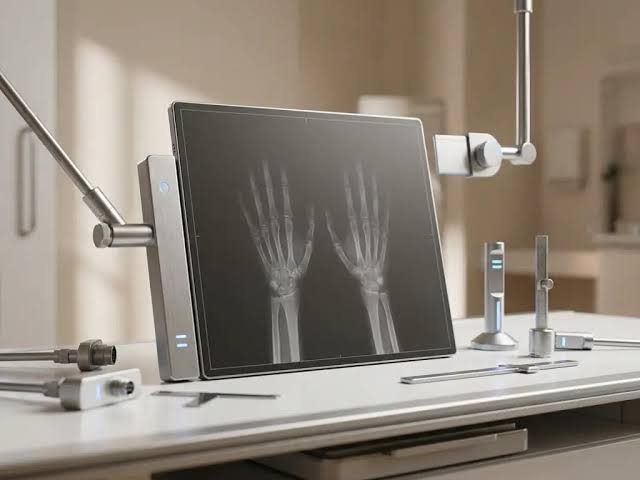
Understanding a DR Detector
A DR detector is the component that captures X-ray information and converts it into a digital image. Depending on the technology, detectors may use different materials and conversion methods.
Detectors are available in configurations designed for specific imaging applications. Some are integrated into fixed radiography equipment, while others are portable and can be used with compatible systems.
When selecting a detector, healthcare facilities should evaluate image quality, detector size, durability, workflow compatibility and service requirements. Weight, handling and battery performance may also matter for mobile or portable applications.
Detector specifications should always be considered alongside the complete imaging system rather than in isolation.
What Is a DR Retrofit?
A DR retrofit upgrades an existing compatible radiography system by adding digital detector technology and associated components. Instead of replacing the entire X-ray installation, a facility may be able to modernise parts of its equipment.
For some hospitals and diagnostic centres, this approach can be worth evaluating when existing X-ray generators and mechanical components remain suitable for continued use.
However, not every system can be retrofitted. Compatibility depends on the existing equipment, detector configuration, software, electrical requirements and applicable safety standards.
A retrofit assessment should also consider installation downtime, staff training, maintenance arrangements and whether the upgraded system can integrate with the facility’s image-management infrastructure.
Choosing Between Film, DR and Retrofit Options
The right option depends on clinical requirements, budget, examination volume and the condition of existing equipment.
| Consideration | X-ray film | Digital radiography | DR retrofit |
| Image capture | Film-based | Digital detector | Digital detector added to compatible existing equipment |
| Image handling | Physical processing and storage | Electronic display and storage | Electronic workflow, depending on configuration |
| Infrastructure | Film processing and storage | Digital imaging and IT infrastructure | Existing equipment plus compatible digital components |
| Main consideration | Ongoing film workflow | System investment and integration | Compatibility and upgrade costs |
A careful review of equipment condition, total ownership costs and long-term clinical needs can help facilities choose an appropriate path. Consulting qualified imaging specialists and reviewing manufacturer specifications are important steps before changing an established radiography workflow.