Most articles about hair transplants describe a typical patient: a man with a receding hairline and a healthy donor area. Real consultations are more varied. Some people are deeply nervous about needles, some have scars where hair no longer grows, and some simply do not have enough donor hair on the scalp. These cases are not unusual, and each has its own set of options worth understanding.
When Anxiety Is the Main Barrier
A hair transplant is usually carried out under local anaesthesia, which means the patient is awake for several hours. For many people the most uncomfortable moment is the anaesthetic injection itself. For those with strong needle anxiety, that alone can be enough to put the whole idea on hold.
Conscious sedation is one way to help. The patient stays breathing independently and can respond, but feels relaxed and drowsy while the local anaesthetic is applied. It is not the same as general anaesthesia.
Points to clarify beforehand
- who administers and monitors the sedation, ideally an anaesthesia specialist
- which health conditions or medications might make sedation unsuitable
- whether someone needs to accompany you afterwards
- how long you should wait before eating, walking around or travelling
Hair Restoration on Scars
Scars on the scalp or in the eyebrows and beard can come from accidents, burns, earlier surgery or older strip-harvest transplants. Scar tissue does not grow hair on its own, but a scar hair transplant places grafts directly into the scar to camouflage it.
Results on scar tissue are usually less predictable than on normal skin. Blood supply in scarred areas tends to be weaker, so graft growth can vary. A doctor may suggest a smaller test session first, and larger scars sometimes need more than one procedure. People with a history of keloid scarring should mention it early, because it affects whether surgery is advisable at all.
When the Scalp Donor Is Limited
The back and sides of the scalp are the usual donor area because those follicles tend to resist the hormone that drives pattern baldness. In advanced hair loss, or after previous transplants, that supply may already be stretched.
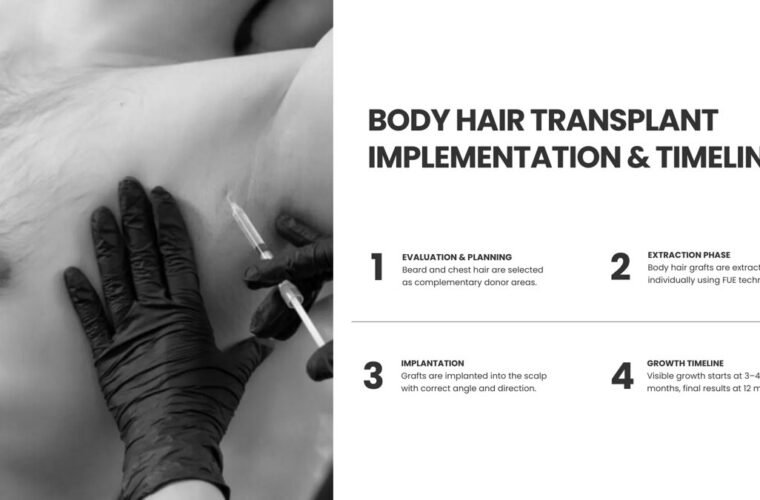
In selected cases, body hair as donor material can supplement the scalp. Beard hair is the most common source, followed by chest hair. These grafts are typically used to add density in the crown or behind the hairline rather than in the visible front line.

Limits of body hair
- body hair is often finer or coarser than scalp hair and may look different
- its natural growth cycle is shorter, so it may not grow as long
- growth rates from body donor sites are usually less predictable
- extraction from the chest or beard leaves small marks that need healing time
For these reasons, body hair is generally considered a supplement rather than a replacement for scalp donor hair.
Combining These Situations
These special cases sometimes overlap. A patient with an old linear scar from strip surgery may also have a depleted scalp donor area and understandable nerves about another procedure. In that situation, the plan might combine sedation, careful grafting into the scar and a limited number of beard grafts. Each element adds its own considerations, so the medical team should explain how they fit together and what a realistic outcome looks like.
Conclusion
Anxiety, scars and a limited donor supply do not automatically rule out a transplant, but they do call for more careful planning and realistic expectations. The right approach depends on your health, your skin and your goals. A thorough assessment by a qualified doctor is the only way to know which options genuinely apply to you.