Introduction
Bloating after almost every meal, constant acidity, irregular digestion — sound familiar? A lot of this comes down to gut health, and the good news is that foods for gut health are far simpler and cheaper than any supplement aisle would have you believe.
Why Gut Health Affects More Than Just Digestion
Direct answer: Foods for gut health — like curd, fibre-rich vegetables, and fermented foods — support good bacteria in your intestines, which in turn affects digestion, immunity, and even mood, according to current gut-health research.
I’ve noticed clients who fix their gut health often report better sleep and mood too, not just less bloating — the gut-brain connection is genuinely underrated.
Fermented Foods: Your Gut’s Best Friend
- Curd/yogurt — daily, ideally homemade
- Idli/dosa batter (fermented) — common in South Indian diets already
- Pickled vegetables (in moderation, watch the salt)
Fermented foods introduce beneficial bacteria directly, which is why traditional Indian meals with curd as a side dish were smarter than we realized.
Fibre-Rich Foods for Gut Health
Fibre feeds your good gut bacteria and keeps digestion moving smoothly. Most Indians don’t get anywhere close to the recommended 25-30g fibre daily.
- Whole fruits (with skin where edible) over juices
- Whole grains — oats, brown rice, whole wheat
- Vegetables — especially leafy greens and legumes
[link to related guide on high protein vegetarian foods here]
Prebiotic Foods That Feed Good Bacteria
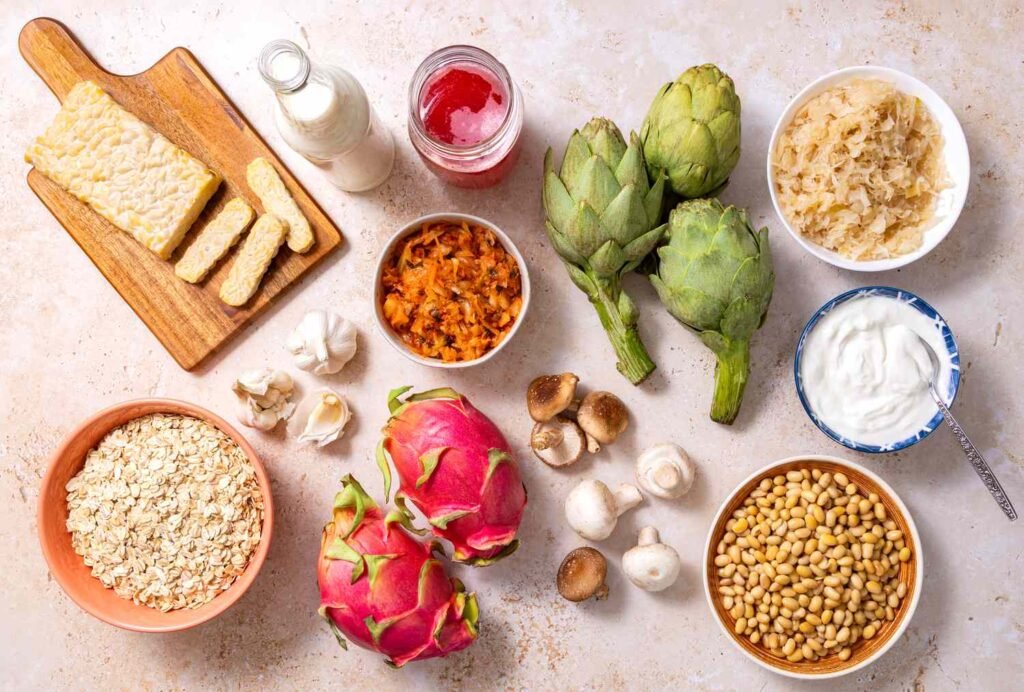
Prebiotics are basically food for your gut bacteria. Garlic, onions, bananas, and oats are easily available prebiotic-rich foods that most Indian kitchens already use daily.
Foods That Hurt Gut Health
- Excess sugar and processed snacks
- Deep-fried food consumed very frequently
- Artificial sweeteners in large quantities
- Overuse of antibiotics without doctor guidance
A Simple Gut-Friendly Meal Structure
- Start the day with warm water, maybe with soaked methi seeds
- Include curd with at least one meal daily
- Add a fibre source (vegetable/fruit) to every meal
- Stay hydrated through the day, not just at meals
When Should You See a Doctor?
Occasional bloating is normal, but persistent digestive issues, unexplained weight loss, or blood in stool need proper medical attention — don’t try to self-treat serious symptoms with diet alone.
[link to related guide on general physician vs specialist here]
FAQ
Q1. What foods for gut health work fastest for bloating? Curd and ginger tend to give relatively quick relief, though consistent dietary changes matter more long-term.
Q2. Is curd better than probiotic supplements? For most people, yes — natural fermented foods offer live cultures along with other nutrients supplements lack.
Q3. How much fibre do I need daily for good gut health? Around 25-30g daily is generally recommended, though most people currently consume far less.
Q4. Can poor gut health affect mood? Yes, research increasingly shows a strong gut-brain connection affecting mood and mental clarity.
Q5. Are probiotic supplements necessary if I eat well? Not usually — a diet rich in fermented and fibrous foods often covers most people’s needs without supplements.
Conclusion
Improving gut health doesn’t require an expensive overhaul — the right foods for gut health are likely already sitting in your kitchen. Start by adding curd daily and increasing fibre intake, then notice how your digestion (and maybe even your mood) shifts over the next few weeks.